A Systematic Sample Size Analysis of ML-Based Path Loss Prediction for LPWAN
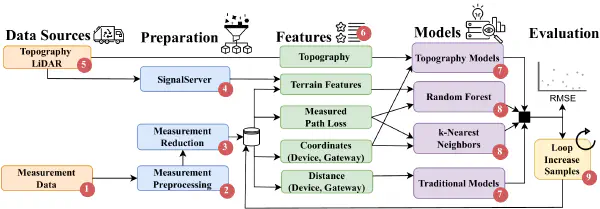
Low Power Wide Area Networks like LoRa are increasingly deployed for smart city applications, requiring accurate path loss prediction for effective network planning. Traditional (empirical) propagation models often exhibit limited accuracy in these scenarios. We investigate machine learning models for LoRa path loss prediction, systematically analyzing how prediction accuracy scales with training set size using real-world measurements from an urban deployment.
Our approach employs a Random Forest with LiDAR-derived terrain features and k-Nearest Neighbors with coordinate data, comparing their performance against established empirical models and specialized LPWAN models. Under random pooled splits, both ML models consistently outperform the considered baseline models across the evaluated training-set sizes. At maximum training size, they achieve RMSE values below 6.5 dB compared to 9.7 dB for the best baseline, indicating accurate within-deployment interpolation.

Smart-Region Bonn/Rhein-Sieg Chancen für die Wirtschaft und Perspektiven für die Bevölkerung
Die Region Bonn/Rhein-Sieg steht vor einem bedeutenden Wandel. Digitalisierung und innovative Technologien prägen zunehmend unseren Alltag und eröffnen neue Perspektiven für Wirtschaft, Verwaltung und Gesellschaft.
Im Mittelpunkt steht die Frage, wie digitale Lösungen Lebensqualität, Wettbewerbsfähigkeit und Nachhaltigkeit in der Region Bonn/RheinSieg stärken können. Dabei nutzt die vorliegende Studie insbesondere die Kategorien des aktuellen Smart City Index des Bitkom e. V. als Ausgangspunkt. Bei diesem Index stagnierte die Bundesstadt in den letzten Jahren, während andere Städte aufholten. Die vorliegende Studie erweitert nun die Diskussion entlang dieser Kategorien auf die gesamte Region.
Autarke Breitbandnetze Im Katastrophenfall Forschung auf dem Summer Breeze Open Air
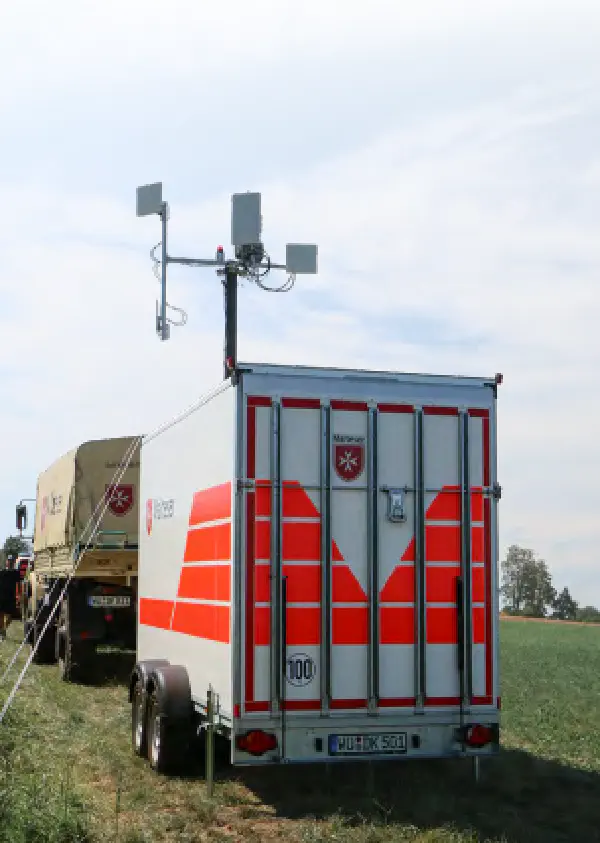
Ein Metal-Festival als Testumgebung für ein Forschungsprojekt? Was auf den ersten Blick ungewöhnlich erscheint, war für das Team des Forschungsprojekts 5G-Opportunity eine einmalige Gelegenheit, um auf dem Summer Breeze Open Air 2024 die Forschungsergebnisse für eine innovative Kommunikationslösung im Zivil- und Katastrophenschutz zu erproben. Gemeinsam mit dem Malteser Hilfsdienst konnten die Einsatzabschnittsleitungen zuverlässig über WLAN-Richtfunk miteinander verbunden werden. Um auch auf dem Festivalgelände selbst den mobilen Einsatzkräften einen Netzzugang zu bieten, wurde eine Kombination aus WLAN- und 5G-Access verwendet. Ein zentrales Forschungsziel war der flexible Einsatz von 5G-Frequenzen: Freies Spektrum sollte vor Ort mit speziellen Messgeräten erkannt werden, um dann opportunistisch genutzt werden zu können.
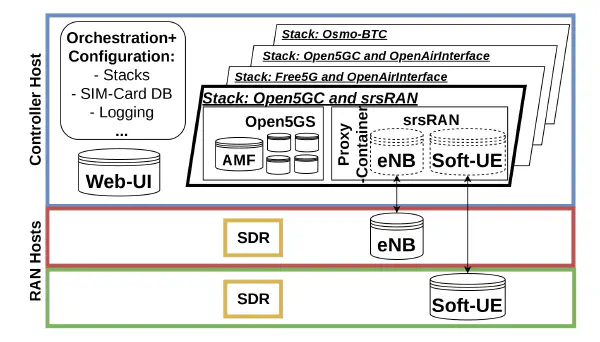
open5Gcube: A Modular and Usable Framework for Mobile Network Laboratories
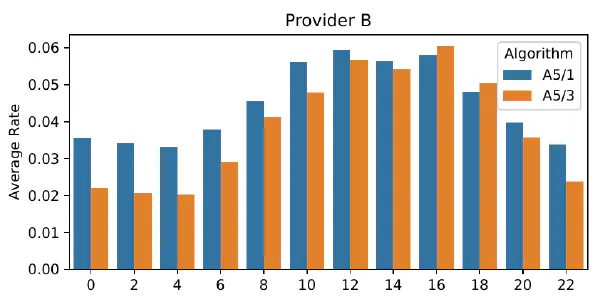
A5/1 is in the Air: Passive Detection of 2G (GSM) Ciphering Algorithms
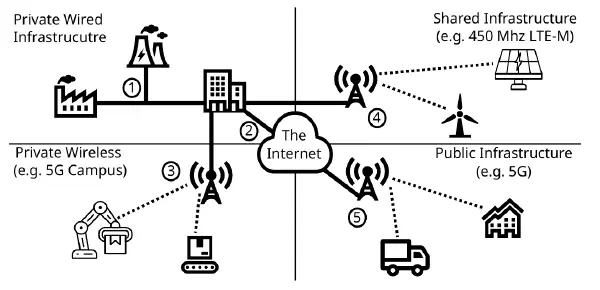
Adaptive Optimization of TLS Overhead for Wireless Communication in Critical Infrastructure
With critical infrastructure increasingly relying on wireless communication, using end-to-end security such as TLS becomes imperative. However, TLS introduces significant overhead for resource-constrained devices and networks prevalent in critical infrastructure. In this paper, we propose to leverage the degrees of freedom in configuring TLS to dynamically adapt algorithms, parameters, and other …
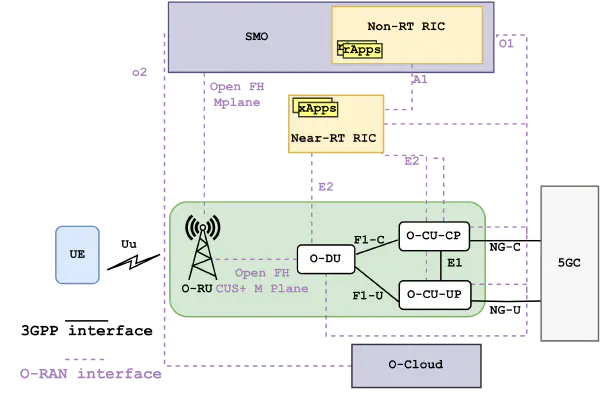
Open RAN: A Concise Overview
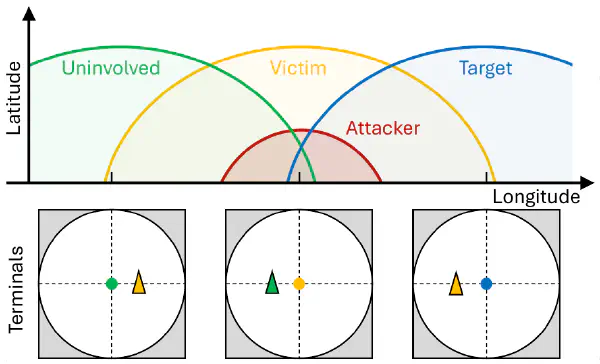
Dude, Where’s That Ship? Stealthy Radio Attacks Against AIS Broadcasts
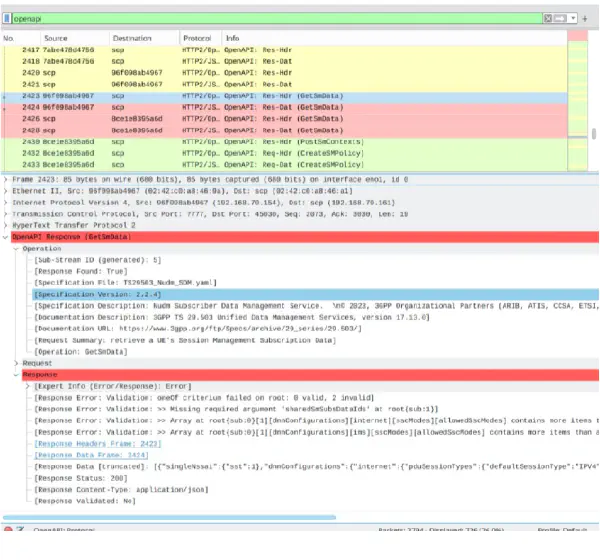
Implementation of OpenAPI Wireshark Dissectors to Validate SBI Messages of 5G Core Networks
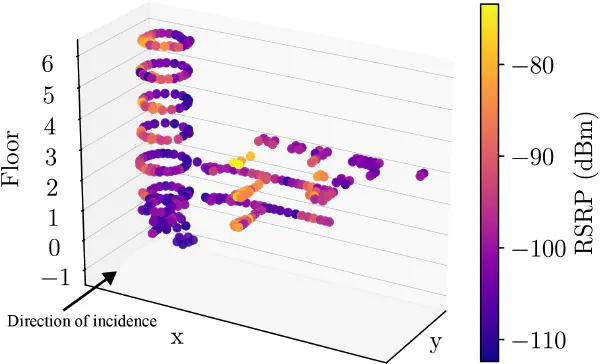
Measurements of Building Attenuation in 450 MHz LTE Networks
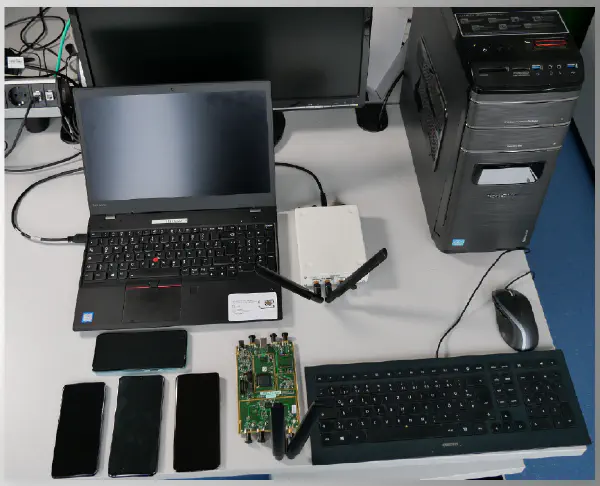
Security Vulnerabilities in 5G Non-Stand-Alone Networks: A Systematic Analysis and Attack Taxonomy
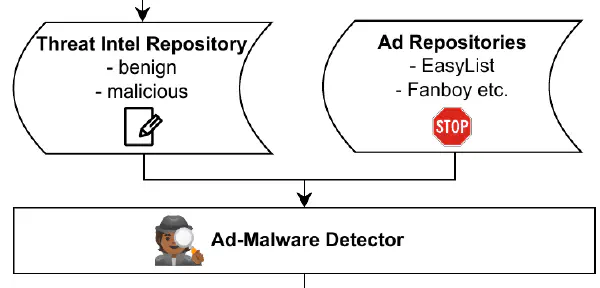
Utilizing DNS and VirusTotal for Automated Ad-Malware Detection
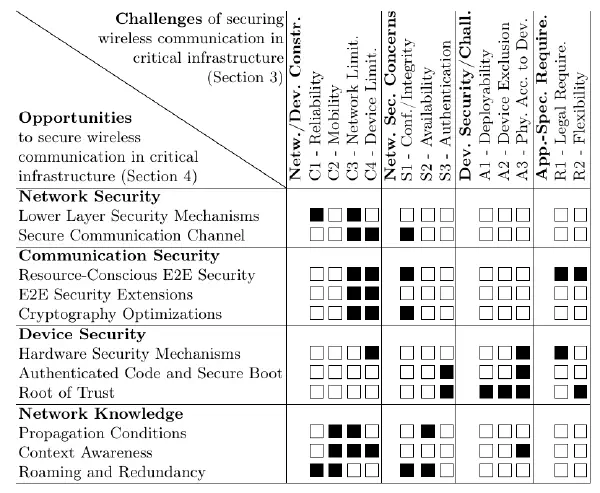
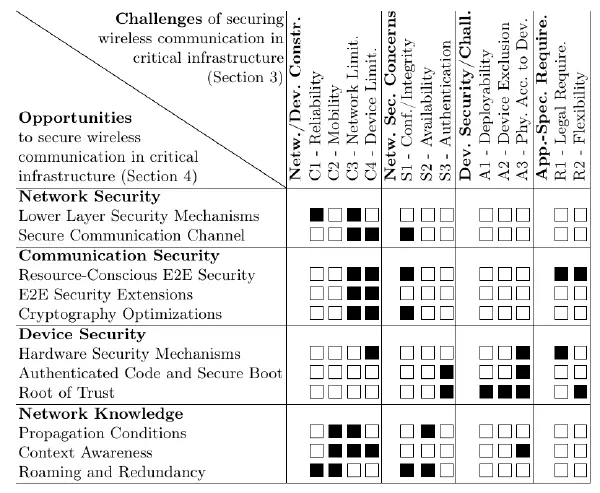
Securing Wireless Communication in Critical Infrastructure: Challenges and Opportunities
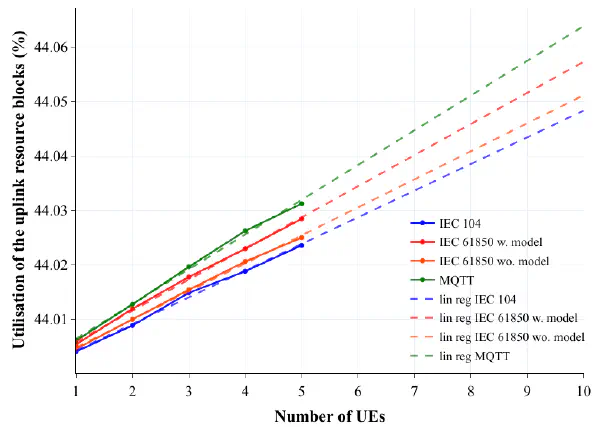
A Modular Framework for Evaluating Smart Grid Communication Protocols over Mobile Networks
Katti: An Extensive and Scalable Tool for Website Analyses
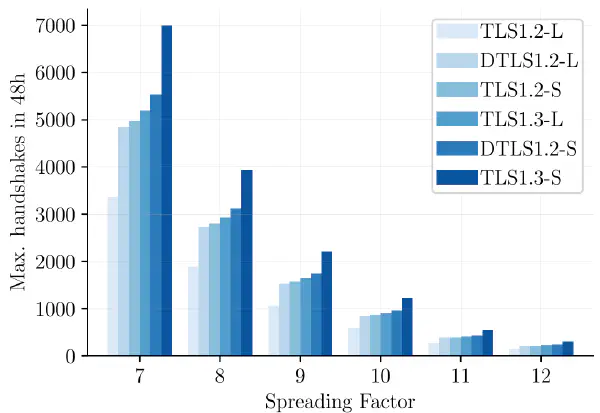
Bounds for the Scalability of TLS over LoRaWAN
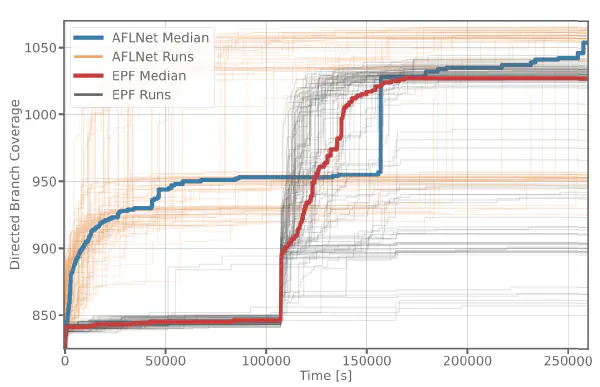
EPF: An Evolutionary, Protocol-Aware, and Coverage-Guided Network Fuzzing Framework
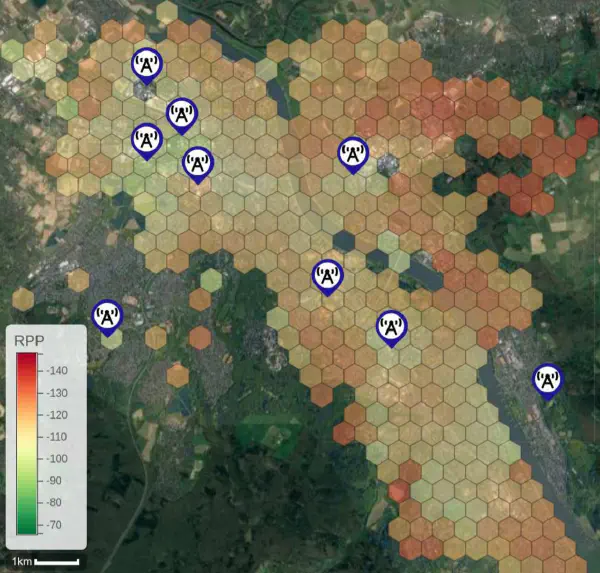
Path Loss in Urban LoRa Networks: A Large-Scale Measurement Study
Urban LoRa networks promise to provide a cost- efficient and scalable communication backbone for smart cities. One core challenge in rolling out and operating these networks is radio network planning, i.e., precise predictions about possible new locations and their impact on network coverage. Path loss models aid in this task, but evaluating and comparing different models requires a sufficiently …